


Snowshoeing and winter hiking
Off the beaten track and in the midst of nature
Snowshoeing in the tranquillity of the Low Tauern Mountains, the Totes Gebirge, the Gesäuse, the Seetal Alps and the Fischbach Alps is a feast for nature lovers.
Hiking through the pristine snow with lightweight snowshoes is a great alternative to skiing or snowboarding. Away from the hustle and bustle, countless snowshoeing routes criss-cross the winter landscape of Steiermark.
The best thing about it: No prior experience is required. Simply put on your snowshoes and off you go! Don’t forget: Please respect our guidelines on safety in the mountains!
The most beautiful snowshoe hikes
Whether it's a leisurely circular tour to try out your snowshoes or challenging trails through dense forests: In Steiermark, beginners and experts alike will find the right hike for them.
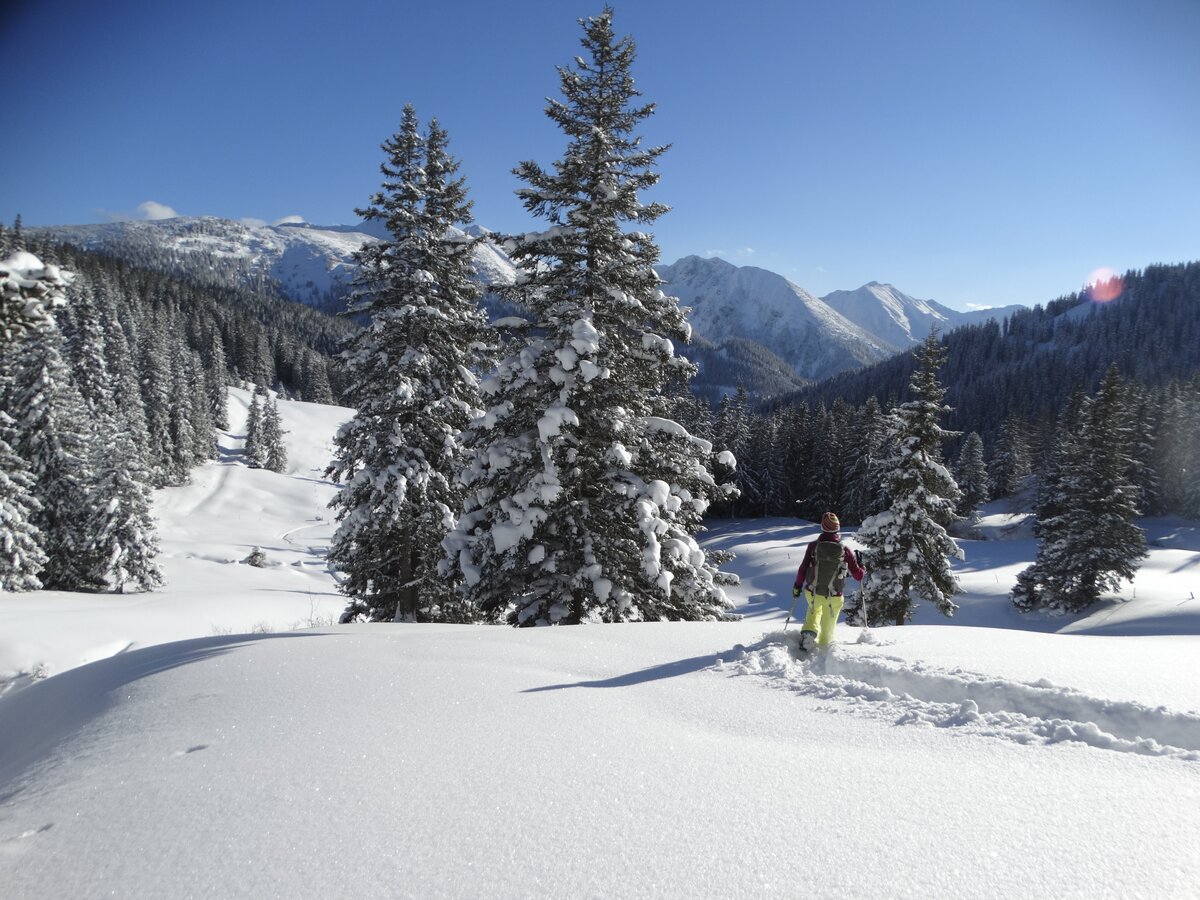
Safe snowshoeing
5 steps to a perfect snowshoeing experience:
- Plan your snowshoe hike in advance! Ideally, choose trails with little altitude difference as this makes it easier to tackle the ascents and descents.
- Check the avalanche forecast and find out about the current warning level!
- Bring adequate gear:
- warm boots and waterproof gaiters
- solid snowshoes with climbing aid
- high-quality, telescopic hiking poles
- a backpack with sufficient food and drinks as well as a set of spare clothes
- an avalanche kit including an avalanche transceiver, a shovel and a probe
- Use the right technique! Walk naturally, use the climbing aid when necessary and optionally remove and store the snowshoes on downhill passages.
- Respect nature and the animals!
Perfectly prepared: The information and safety tips provided by the Austrian Alpine Association help you to plan your snowshoe hike so that it becomes a one-of-a-kind experience.
The mountains are mute masters who make for silent pupils.
Culinary delights during winter hiking
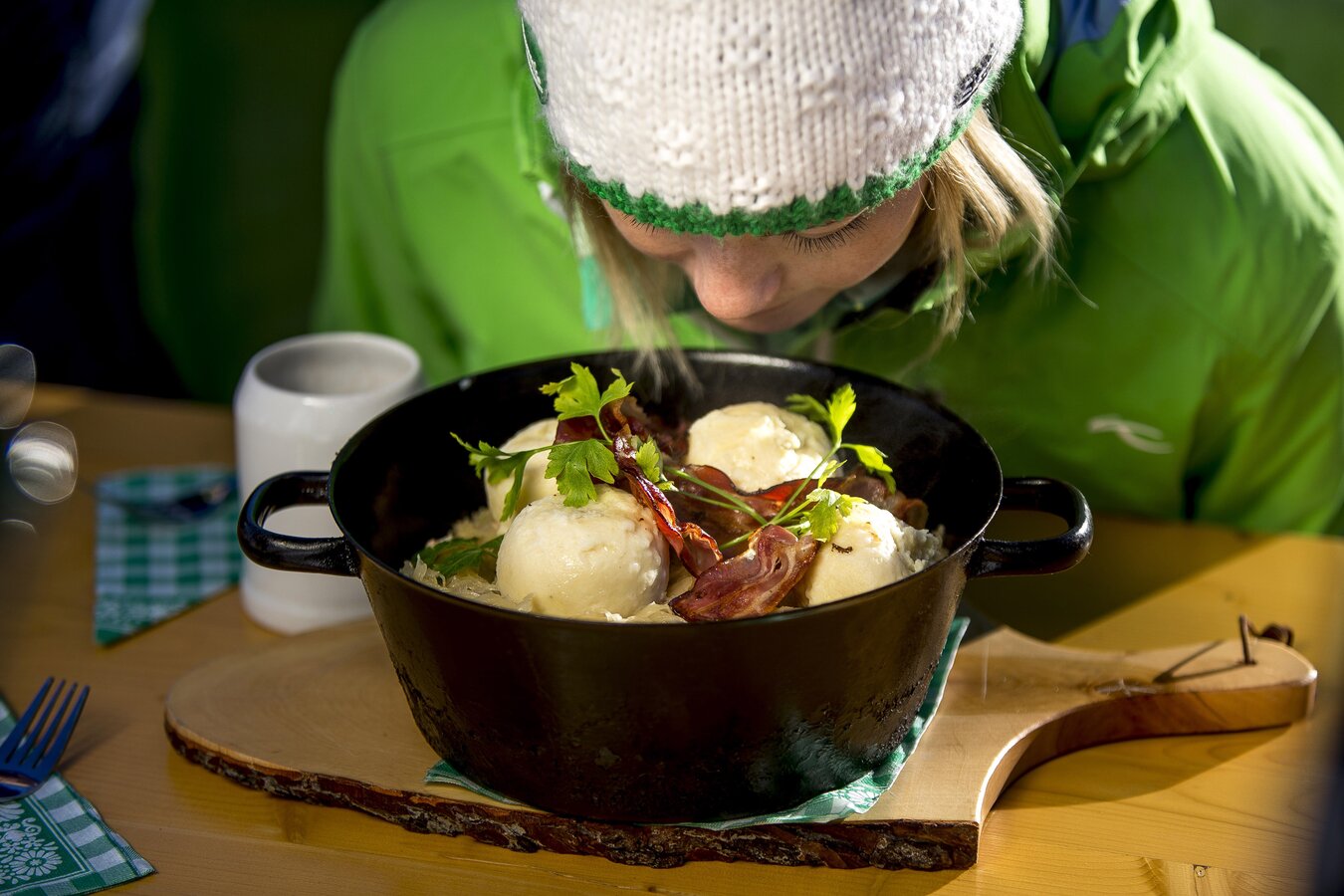
The best thing about a long and glorious snowshoe hike? The breaks! Take a seat a mountain hut and enjoy the sunshine and great views.
What’s more, the traditional Styrian delicacies served at the mountain huts always come with a side of fresh mountain air.
The most beautiful winter hiking trails
Winter hiking in Steiermark is an unforgettable experience for nature lovers and those seeking relaxation. The snow-covered landscapes create a dreamlike backdrop for relaxed hikes: Tours through idyllic forests, past glistening streams and to breathtaking views.


FAQ - Frequently Asked Questions about snowshoeing and winter hiking in Austria
What should you consider when planning a tour? Are there guided tours available?
Whether winter hiking or snowshoeing – with the right preparation, a winter holiday in Steiermark becomes a safe and immersive nature experience. Here you will find the most important answers about winter hiking and snowshoeing in Steiermark.
Winter hiking trails are designed to be sufficiently wide, only moderately steep and not exposed, so they can be walked relatively safely even in poor weather and snowfall, provided suitable footwear is worn.
Snowshoe trails lead away from well-trodden or cleared paths through the winter landscape. Important: always stay on marked routes and do not walk on cross-country ski tracks.
Winter hiking and snowshoeing are two ideal ways to enjoy a peaceful winter walking holiday away from the ski slopes.
A winter walking holiday in Steiermark is particularly suitable for those seeking active relaxation and tranquillity away from the hustle and bustle of everyday life. Exercising in nature at low temperatures stimulates the cardiovascular system, strengthens the immune system and makes the body less susceptible to infections.
Snowshoeing is considerably more demanding than hiking in summer. A good basic level of fitness is therefore recommended, especially for snowshoeing. When the snow is deep, each step requires significantly more effort.
As a rough guideline: one hour of summer hiking corresponds to approximately ten minutes of snowshoeing. For this reason, it is advisable to undertake your first snowshoe tour with a guide.
Planning & equipment
Breathable, weatherproof outdoor clothing is essential. Proper footwear is also crucial for winter hiking. Shoes should fit well, keep your feet warm, be stable, and waterproof. Boots or hiking shoes with a grippy sole and good tread are ideal, as they provide better traction on snow and ice (tip: use traction devices such as microspikes).
The market for snowshoes has grown considerably in recent years. For your first tours, it is often worth renting snowshoes – either at your hotel or from a local ski or cross-country rental shop. This allows you to try snowshoeing and find out which type of equipment suits you best.
Other important items include:
- Sun protection (sunglasses, sunscreen, hat)
- Cold protection (warm hat, gloves)
- Backpack with padded shoulder straps and a ventilated back
- Hiking poles (telescopic poles are ideal)
- Refillable water bottle
Additional items to pack in your backpack:
- Identification, insurance, and membership cards (e.g. Alpine Club)
- Cash (many mountain huts do not accept debit or credit cards)
- First-aid kit and personal medication (plasters, blister plasters, bandages, disinfectant spray, emergency blanket, etc.)
- Mobile phone with a fully charged battery and charger, possibly a power bank (store important numbers, Alpine emergency number: 140)
- Headlamp or small torch
- Pocket knife and lighter
- Toilet paper
- Hiking map and information material, GPS optional
Be sure to bring enough food and drinks. Muesli bars, nuts, or dried fruit make excellent snacks. Due to the physical exertion and the cold temperatures, both calorie and fluid requirements are higher.
Yes. In Steiermark, there are numerous designated routes. The tour should be chosen according to your level of fitness as well as the current snow conditions. Depending on the snow cover, a route may become easier or more demanding. Important: overestimating your abilities will not do you any favours in the end.
Visitors can obtain information about marked winter hiking trails and snowshoe tours from the regional tourism offices.
Yes. The range extends from snowshoe hikes for beginners to summit tours with certified guides. Guided snowshoe hikes are particularly ideal for newcomers, as they allow you to learn the correct technique right from the start.
Safety & nature conservation
Please always stay on marked trails. Untouched snow-covered areas are often important refuges for wildlife, which react particularly sensitively to disturbance in winter. Deer, chamois and other animals can become stressed by unexpected encounters. Even a single disturbance may force them to use up vital energy reserves needed for survival.
Plants beneath the snow cover can also suffer lasting damage from footprints. Marked winter hiking and snowshoe routes are therefore not only safer, but also carefully planned to protect nature.
Winter hiking and snowshoeing generally involve a low risk of injury, provided safety guidelines are followed and equipment is appropriate. However, it is not simply a walk in the snow – especially snowshoeing is a physical activity, so careful planning is important.
If conditions are icy, hiking poles – ideally telescopic poles – are very helpful for winter hiking. Icy patches can often be avoided by walking along the edge of the path. In many hotels, snowshoes and hiking poles are available for hire.
The mountain rescue emergency number 140 is available throughout Austria for accidents in alpine terrain. Alternatively, the European emergency number 112 can be dialled – both numbers activate the rescue chain.
Regions & special experiences
Popular regions for winter hiking and snowshoeing include:
For active and sporty visitors:
- Schladming-Dachstein
- Gesäuse
- Erzberg-Leoben
For leisure seekers:
- The lake landscapes of Ausseerland Salzkammergut
- The alpine pastures in Hochsteiermark, Region Murau, Erlebnisregion Murtal and in the western part of the Region Graz around the Koralpe
- The wine regions of Eastern Styria, Thermen- & Vulkanland and Southern Styria
For those seeking tranquillity:
- The nature parks, which place a strong focus on relaxation and peaceful holidays
Yes. Numerous mountain stations of cable cars and chairlifts serve as starting points for winter hiking trails and snowshoe tours. Particularly popular are:
- Tauplitz / Tauplitzalm
- Stuhleck
- Kreischberg
- Rittisberg
Tip: The Stuhleck winter hiking ticket and the Schladming-Dachstein winter hiking ticket are valid on the mountains Planai, Hochwurzen, Dachstein, Galsterberg, Reiteralm, Fageralm and Hauser Kaibling. They include numerous rides on cable cars, chairlifts and buses.
Yes, exceptionally well. A winter walking holiday in Steiermark can be ideally combined with wellness, visits to thermal spas and regional cuisine. Numerous hiking hotels feature spa areas, and the 9 thermal spas in Steiermark are perfect for relaxation.
Culinary delights await along the way in many mountain huts. When planning your tour, please be sure to check the huts’ winter opening times.
Absolutely. Many regions are easily accessible by train. Locally, ski buses — which hikers can also use (sometimes for a small fee) — as well as shuttle services are widely available.
Dogs must always be kept on a lead, ideally positioned in the middle of the group, and should wear a muzzle. Please also ensure that the dog is in good health; if necessary, consult a veterinarian in advance.
Depending on the breed, paw protection may be required, along with sufficient food and water. Please also check and observe any regional regulations beforehand.


